
Wellness • 4/6/2026
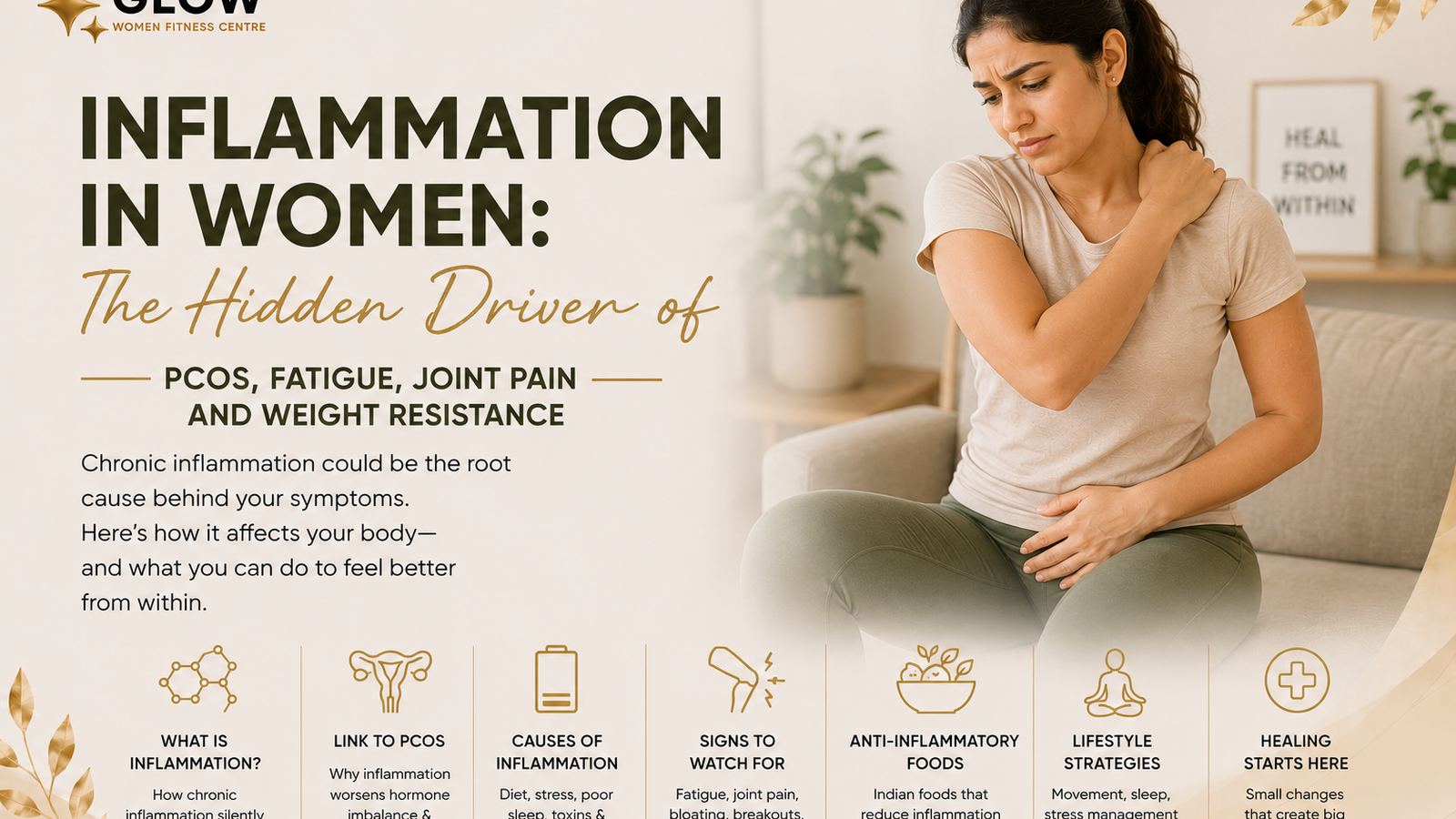
Inflammation in Women: The Hidden Driver of PCOS, Fatigue, Joint Pain and Weight Resistance
Chronic low-grade inflammation underlies most of the conditions women struggle with — PCOS, fatigue, joint pain, weight loss resistance, mood. What it is, the labs to test, and the anti-inflammatory living that works.
“Inflammation” gets thrown around in wellness marketing as if it explains everything. Sometimes that overstates the case. But sometimes it’s accurate: chronic low-grade inflammation is a real driver of many of the conditions modern women deal with — PCOS, insulin resistance, weight-loss resistance, joint pain, autoimmune conditions, mood disorders, even some causes of accelerated ageing.
Here’s the honest version — what it actually is, how to test for it, and the evidence-based interventions that move it.
Acute vs chronic inflammation — they’re different
Acute inflammation is healthy. You cut yourself, the area gets red, swollen, warm — the immune system is fighting infection and starting healing. Acute inflammation resolves quickly when the threat resolves.
Chronic low-grade inflammation is different. The body’s inflammatory response stays on for months or years — not high enough to cause obvious illness, but high enough to slowly damage tissues, drive disease, and disrupt hormones.
You can’t feel it directly. But it shows up in symptoms you might dismiss as “just stress” or “just my body”.
Symptoms of chronic inflammation in women
The cluster:
- Persistent fatigue that doesn’t lift with rest
- Joint pain or stiffness (especially mornings)
- Skin issues — adult acne, eczema flares, psoriasis, unexplained rashes
- Weight loss resistance despite “doing everything right”
- Brain fog, slower thinking
- Mood instability, anxiety, depression
- Frequent minor illnesses (colds, infections)
- Gut symptoms (bloating, irregular bowels)
- Hormonal symptoms — irregular cycles, severe PMS, PCOS amplification
- “Always running on cortisol” feeling
You don’t need all of these. Three or more, persistently, is worth investigating.
What drives chronic inflammation in women specifically
The big six:
1. Refined carbohydrates and sugar
Spikes blood sugar, then insulin, then inflammatory cytokines. Daily refined-carb eating (white rice, maida, biscuits, sugar drinks) keeps inflammation simmering.
2. Industrial seed oils
Sunflower, soybean, corn oil — the “vegetable oils” used in most Indian restaurant and packaged food. Their high omega-6 content, when consumed in excess relative to omega-3, drives inflammation. The traditional Indian cooking fats (ghee, coconut oil, mustard oil) are more stable and less inflammatory.
3. Chronic stress + poor sleep
Both directly elevate inflammatory markers. A woman with chronic 5-hour-night sleep + work stress has measurably higher CRP (an inflammation marker) than a well-slept matched control.
4. Sedentary lifestyle
Movement is anti-inflammatory. Inactivity is inflammatory in itself. Sitting 10+ hours a day pushes inflammatory markers up regardless of what else you do.
5. Gut imbalances
The gut microbiome influences systemic inflammation. Dysbiosis (imbalanced gut bacteria) — from antibiotic overuse, poor diet, chronic stress — drives inflammation throughout the body.
6. Iron, vitamin D, magnesium, omega-3 deficiencies
All four are nutrients with anti-inflammatory roles. Most Indian women are deficient in at least one — often multiple.
How chronic inflammation drives women’s health issues
The mechanistic links worth knowing:
PCOS: chronic inflammation amplifies insulin resistance, raises androgens, worsens every PCOS symptom. PCOS treatment that ignores inflammation is half a treatment.
Weight loss resistance: high inflammation interferes with leptin (the satiety hormone) and insulin. The body becomes resistant to its own metabolic signals.
Joint pain: chronic inflammation breaks down cartilage faster, causes generalised stiffness, worsens age-related arthritis.
Depression and anxiety: inflammation in the brain (neuroinflammation) is increasingly recognised as a contributor to mood disorders. Many newer antidepressant research targets are anti-inflammatory.
Skin conditions: acne, eczema, psoriasis all have inflammatory components.
Auto-immune conditions (Hashimoto’s, lupus, rheumatoid arthritis): more common in women, driven by inflammation.
Cardiovascular disease: chronic inflammation is a primary mechanism, especially relevant for post-menopausal women.
How to test for inflammation
The basic labs (ask your doctor):
- hs-CRP (high-sensitivity C-reactive protein) — the most common inflammation marker. Below 1 mg/L is ideal; 1–3 borderline; above 3 is elevated.
- ESR (erythrocyte sedimentation rate) — another inflammation marker; often runs alongside hs-CRP.
- Ferritin — paradoxically, a high ferritin can indicate inflammation (ferritin is also an acute-phase reactant). Worth interpreting alongside other iron markers.
- HbA1c + fasting insulin — chronic high blood sugar drives inflammation.
- Omega-3 index (if available) — low omega-3 status raises inflammatory risk.
- Vitamin D — low D allows inflammation to run higher.
If hs-CRP is consistently above 3 mg/L without an obvious acute cause, that’s a meaningful signal worth addressing — and worth a deeper workup with a doctor.
The anti-inflammatory protocol
Five interventions, in order of leverage:
1. Eat for low inflammation
The pattern:
Add more of:
- Leafy greens (palak, methi, spinach) — daily
- Berries (when affordable) — anti-inflammatory polyphenols
- Turmeric — curcumin is a well-studied anti-inflammatory; pair with black pepper for absorption
- Ginger and garlic — both have anti-inflammatory effects
- Fatty fish (rohu, salmon, sardines) if non-veg — omega-3 EPA + DHA
- Walnuts, flaxseed, chia — plant omega-3 (ALA)
- Olive oil, ghee, mustard oil — stable cooking fats
- Whole pulses, millets — fibre supports gut microbiome
- Green tea, ginger tea — moderate anti-inflammatory effect
Limit:
- Refined carbs (white rice in excess, maida, biscuits, sugar drinks)
- Industrial seed oils (the cheap “vegetable oil” in restaurants and packaged foods)
- Highly processed foods
- Excess alcohol
- Trans fats (rare in home cooking; common in commercial bakery, samosas, chips)
- Sugary drinks — possibly the single most inflammatory category
This isn’t extreme — it’s basically a traditional Indian + Mediterranean overlap.
2. Move daily
Movement is anti-inflammatory. The dose:
- Strength training 3× a week
- Daily walking (especially after meals)
- Yoga or mobility 1–2× a week (lowers cortisol → lowers inflammation)
- 1 HIIT session a week (paradox: short HIIT is anti-inflammatory; daily HIIT becomes pro-inflammatory)
Inactivity is inflammatory in itself. The single biggest behavioural change.
3. Sleep — protected fiercely
Below 6 hours, inflammatory markers rise sharply. 7+ hours of consistent sleep is non-negotiable for inflammation control. See our back to perimenopause for sleep-fixing protocols if needed.
4. Manage stress (cortisol = inflammation)
Chronic stress + chronic cortisol drives chronic inflammation. The interventions:
- 10 min daily breath work (long exhales, 4 in / 8 out)
- Daily outdoor walk
- Yoga 1–2× a week
- Reduce phone/screen time before bed
- Talk to a therapist if stress is genuinely unmanageable
5. Fix the nutrient deficiencies
The four with strongest anti-inflammatory roles:
- Omega-3 EPA + DHA — fatty fish 2×/week if non-veg, or 1–2 g supplement (consult doctor)
- Vitamin D — supplementation usually required for Indian women (see vitamin D post)
- Magnesium glycinate — 200–400 mg/day if deficient (consult doctor)
- Iron if deficient — see iron post
Specific conditions where this matters most
PCOS
Inflammation is one of the core PCOS drivers. The anti-inflammatory pattern dramatically improves PCOS symptoms within 12 weeks. See our PCOS posts.
Weight loss resistance
If you’ve been “doing everything” and the scale won’t move, hs-CRP is worth checking. Reducing inflammation often unlocks fat loss that was structurally blocked.
Joint pain (especially knee, lower back)
Anti-inflammatory eating + omega-3 + strength training resolves most non-acute joint pain in women. See our knee pain post.
Autoimmune conditions
The anti-inflammatory protocol is supportive of (not replacement for) medical treatment. Work with a rheumatologist + apply this framework alongside.
Hashimoto’s / thyroid
Specifically inflammation-driven. The anti-inflammatory pattern often helps reduce thyroid antibodies over months.
Common myths
- “Nightshades cause inflammation” — tomato, brinjal, capsicum. Almost no evidence in non-arthritis populations. Eat them.
- “Gluten causes inflammation for everyone” — only if you have coeliac disease or non-coeliac gluten sensitivity. Most people: fine.
- “Anti-inflammatory diet means no carbs” — false. Complex carbs (whole grains, millets, fruits) are part of an anti-inflammatory pattern.
- “Supplements alone fix inflammation” — they support, but eating + movement + sleep + stress are the dominant levers.
- “Coffee is inflammatory” — moderate coffee (2 cups/day) is actually slightly anti-inflammatory. Excess + caffeine + sleep loss tips the balance.
What we recommend at Glow
The Online Everyday Glow program structure — strength + cardio + yoga + walks + cortisol-aware recovery — is, structurally, an anti-inflammatory routine. Combined with the anti-inflammatory eating pattern above, most women see significant inflammation reduction within 8–12 weeks.
For PCOS specifically, see PCOS Self-Assessment.
The short version
- Chronic low-grade inflammation drives PCOS, weight resistance, joint pain, mood, autoimmune, ageing.
- Test: hs-CRP. Below 1 mg/L is ideal; above 3 is elevated.
- The 5 drivers: refined carbs/sugar, industrial seed oils, chronic stress + poor sleep, inactivity, nutrient deficiencies.
- The anti-inflammatory pattern: leafy greens + berries + turmeric + omega-3 + whole grains + stable cooking fats; limit refined carbs, seed oils, processed food.
- Strength training, walking, sleep, stress management, fixing deficiencies — all anti-inflammatory.
- This isn’t extreme — it’s traditional Indian eating + a movement habit, minus the modern junk.