
Wellness • 30/5/2026
Sugar Cravings in Women: Why They Hit Harder (and What Actually Works)
Women's sugar cravings have specific biological drivers — cycle phase, blood sugar swings, sleep debt, stress. Why willpower alone fails, and the 7 interventions that genuinely reduce cravings within 2–4 weeks.
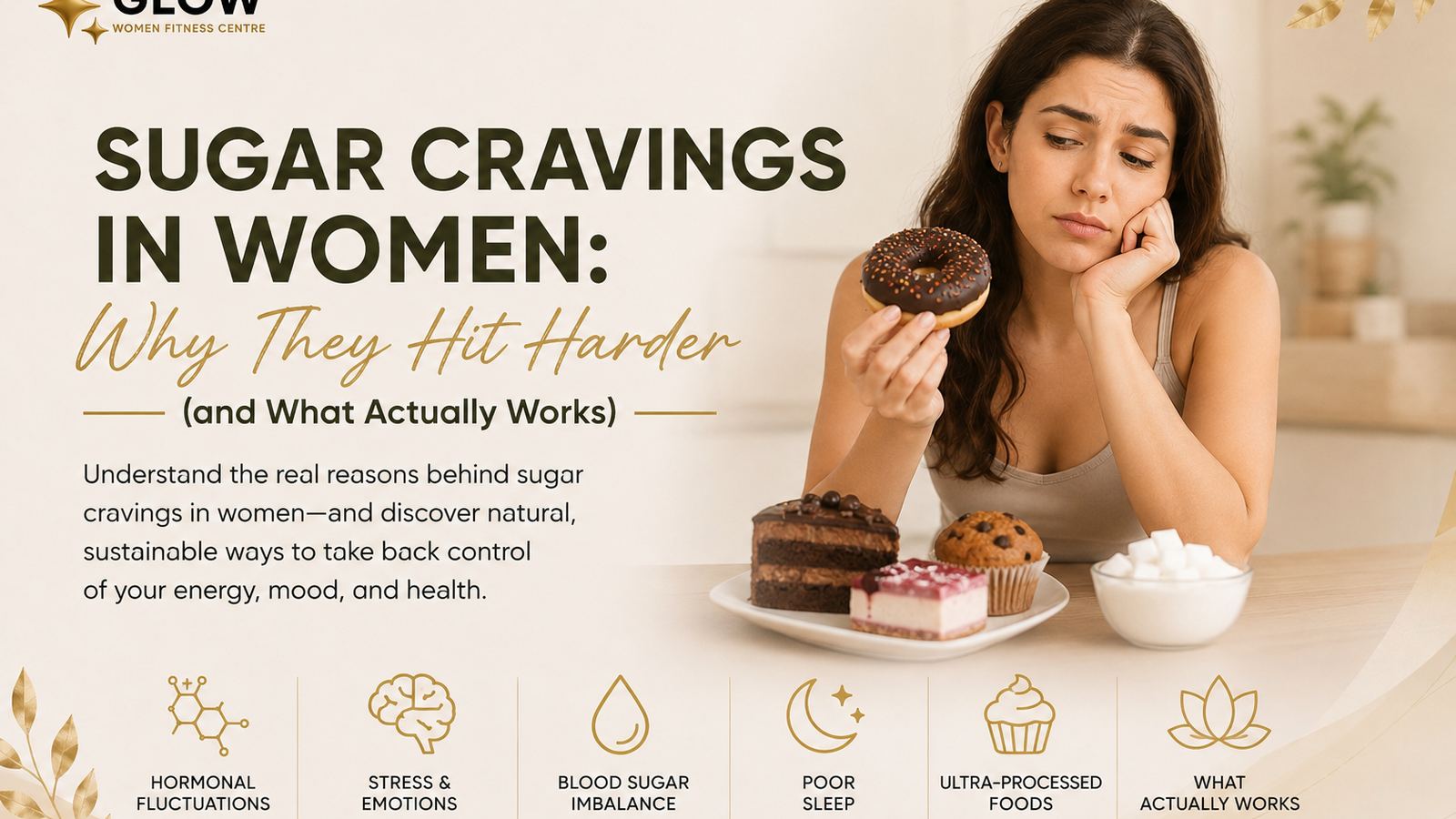
The 4 PM chai-and-biscuit. The post-dinner gulab jamun you “deserve.” The luteal-week chocolate binge. Most women carry quiet shame about sugar cravings, as if the cravings prove a discipline problem.
They don’t. Sugar cravings in women have specific, identifiable biological drivers — and once you fix those, willpower stops being the variable. Here’s what’s actually going on, and the protocol that reduces cravings significantly within 2–4 weeks.
Why women’s sugar cravings are different
Five biological factors hit women specifically:
1. Cycle hormones. In the luteal phase (week before period), oestrogen drops and progesterone rises, both of which lower serotonin and increase appetite — especially for carbs. Up to 300 extra calories of craving in the luteal phase is normal biochemistry, not gluttony.
2. Insulin sensitivity drops in luteal. The same chapati that produces a steady energy bump in the follicular phase causes a bigger spike + crash in the luteal phase. Crash → craving for more sugar.
3. Iron deficiency drives carb cravings. Half of Indian women are iron-deficient (see our iron deficiency post). One reliable symptom: a constant low-grade craving for sweets and refined carbs.
4. Sleep debt amplifies cravings dramatically. One night of poor sleep raises ghrelin (hunger hormone) and lowers leptin (satiety hormone). Cravings the next day can be 300–400 calories higher than the day before — entirely sleep-driven.
5. Stress / cortisol drives sugar-seeking. Chronic stress → high cortisol → blood sugar dysregulation → cravings. Plus the direct emotional-comfort association most of us learned as children.
For women dealing with PCOS, perimenopause, or post-pregnancy specifically, every one of these is amplified.
The 4 PM crash — what’s actually happening
The most universal craving pattern in working women: the 4 PM (or post-lunch) crash where suddenly you need something sweet. Mechanism:
- Lunch was carb-heavy (rice/chapati/biryani) with insufficient protein
- Big insulin response 30–60 min after eating
- Blood sugar drops below baseline by ~2 hours later
- Brain reads “low blood sugar” → triggers a craving for fast carbs
- Tea + 2 biscuits → cycle starts over by 6 PM
The fix isn’t more willpower at 4 PM. The fix is upstream — at lunch.
What actually reduces cravings (in priority order)
1. Protein at every meal (the dominant lever)
The single biggest intervention. 25–30 g of protein at every meal stabilises insulin response, sustains satiety, and dramatically reduces 3–4 hour craving windows.
For most Indian women, the gap is at breakfast. A dosa-and-chutney breakfast (8 g protein) sets you up for a 11 AM craving. The same breakfast plus 2 eggs or 1 cup curd (24 g total) eliminates it.
See our Indian protein guide for specifics by meal.
2. Fix sleep
Below 7 hours of sleep, cravings will fight you regardless of any other change. Sleep is the foundation.
- 7+ hours target
- Same bedtime / wake time even on weekends
- No screens for 30 min before bed
- Magnesium glycinate if sleep onset is hard (consult doctor)
3. Address iron status
If you’re constantly craving carbs and sweets, get ferritin tested (not just haemoglobin). Below 30 ng/mL = functionally deficient. Restoring iron often resolves chronic low-grade cravings within 2 months.
4. Walking after meals
A 15–30 minute walk within an hour of meals blunts the post-meal blood-sugar spike by 30–40%. Smaller spike → smaller crash → no 4 PM craving. Among the highest-leverage interventions, and free.
5. Strength training 3× a week
Improves insulin sensitivity systemically. Women on a consistent strength program report significantly lower cravings within 4–6 weeks. Multiple mechanisms — better insulin response, better sleep, better stress tolerance.
6. Eat enough carbs (yes, really)
The most common mistake: trying to cut carbs sharply to lose weight. Severe carb restriction backfires — cravings intensify, energy drops, sleep suffers, and the inevitable “off plan” day becomes a binge.
The fix: moderate carbs paired with protein and fibre. Not no carbs.
Indian context: 1–2 chapatis at a meal, or 1 cup rice, paired with dal and vegetables, is fine for most women. Make the carbs slow-acting (millets, brown rice, jowar) for steadier energy.
7. Plan luteal-week treats
Pretending the luteal-week cravings don’t exist is how the unplanned binge happens. Plan a daily 100–200 calorie treat during the 7 days before your period — a square of dark chocolate, a small mithai, a cookie with tea. Built into the plan, it doesn’t spiral. Cut off the plan, it explodes by day 5.
This single shift in approach changes the weight-loss trajectory for many women.
What doesn’t work
- Pure willpower — you’re fighting biology
- “Sugar detox” weeks — restrictive, miserable, rarely durable
- Sugar substitutes (in excess) — keep the sweet-taste reward loop alive without addressing the underlying drivers; sometimes worsen cravings
- Skipping meals to “save calories” — virtually guarantees a craving binge later
- Drinking diet sodas — mixed evidence; some research suggests they maintain the sweet preference
A 2-week craving-reduction protocol
If sugar cravings are running your life, work through this:
Week 1:
- Add protein to breakfast (target 20+ g)
- 20-min walk after dinner
- Bed by 11 PM (whatever wake-time)
- Audit caffeine (no caffeine after 1 PM)
Week 2:
- Add protein to lunch (target 30+ g)
- 15-min walk after lunch + 20-min after dinner
- Add 1 daily fistful of nuts/seeds (steady blood sugar)
- Magnesium glycinate 200–400 mg before bed (consult doctor)
By the end of week 2, most women report cravings significantly reduced — often by 50%+. Not because of willpower. Because of biology.
For specific situations
PCOS cravings
Insulin resistance amplifies cravings. Strength training + protein-led eating are non-negotiable. See PCOS Self-Assessment for the full cluster approach.
Perimenopause cravings
Worsen as oestrogen drops. The same playbook above, plus HRT conversation with a doctor. See perimenopause weight gain.
Post-pregnancy cravings
Often driven by sleep debt + breastfeeding (breastfeeding genuinely increases calorie needs by ~400/day). Feed yourself enough during this phase — don’t try to lose weight aggressively while exclusively breastfeeding.
Stress eating
When the craving is purely emotional (not blood-sugar-driven), the fix is different — a 5-minute pause, a glass of water, a walk around the block. Often the craving passes when the stress signal does. If stress eating is a daily pattern, talk to a therapist — it’s a learned pattern, treatable.
What we recommend
Our Online Everyday Glow format builds protein-first eating into onboarding and the 3 weekly strength sessions handle the insulin-sensitivity side. Within 4 weeks, most members report cravings down significantly.
For your specific calorie + macro target, use the calorie calculator.
The short version
- Sugar cravings in women have specific biological drivers — cycle, sleep, iron, stress, insulin response. Not willpower.
- The luteal-week craving spike is real biochemistry (≈300 extra calories of want).
- The 4 PM crash starts at lunch — fix lunch protein.
- Top 7 interventions: protein every meal, sleep, iron status, post-meal walks, strength training, moderate carbs, planned luteal treats.
- Within 2 weeks of doing this, cravings typically drop ~50%. Not from discipline — from fixing the inputs.
Train with us — built-in cravings control → · Find your macros →